Why Bilingual Safety Training Matters in Today's Workplace
In today's increasingly diverse workforce, effective communication is no longer just a nice-to-have, it is a critical component of workplace safety and regulatory compliance. As industries such as construction, manufacturing, and agriculture continue to rely heavily on a multilingual workforce, the need for bilingual safety training has never been more apparent. Providing safety instructions, manuals, and ongoing training in a language that employees fully understand is essential for preventing accidents, ensuring compliance, and fostering a culture of safety.
The Legal Imperative
The Occupational Safety and Health Administration (OSHA) is unequivocal in its stance on language and training. OSHA's training standards require that employers present information in a vocabulary and language that employees can understand. If an employer has a workforce where a significant portion speaks only Spanish, providing safety training only in English is ineffective, and it is a direct violation of OSHA regulations. Failure to comply can result in severe penalties, increased liability, and, most importantly, a higher risk of workplace injuries and fatalities.
When OSHA inspectors visit a site, they often interview employees to gauge their understanding of safety protocols. If an employee cannot articulate the hazards associated with their job or the protective measures required because the training was delivered in a language they do not comprehend, the employer will be held accountable. Bilingual training ensures that you meet these legal obligations head-on, demonstrating a proactive approach to compliance.
Reducing Workplace Accidents
The primary goal of any safety program is to send every worker home safely at the end of the day. Language barriers significantly increase the risk of misunderstandings, which can lead to catastrophic accidents. For instance, a warning sign or a verbal instruction about a hazardous chemical or a dangerous piece of machinery is useless if the worker cannot read or understand it.
Bilingual safety training bridges this gap. By delivering critical safety information in the native language of the workers, employers ensure that the message is heard and fully understood. This deep understanding allows workers to recognize hazards, use personal protective equipment (PPE) correctly, and respond appropriately in emergency situations. The result is a tangible reduction in workplace incidents, lower workers' compensation claims, and a safer environment for everyone.
Improving Employee Engagement
Safety is a shared responsibility, but workers can only participate fully if they feel included and valued. When an employer invests in bilingual training, it sends a powerful message to the workforce: your safety matters, and we respect you enough to communicate with you in your language. This investment fosters trust and loyalty, leading to higher levels of employee engagement.
Engaged employees are more likely to actively participate in safety meetings, report near-misses, and look out for their colleagues. They become the eyes and ears of the safety program on the ground. Bilingual training also lets non-English speaking workers ask questions and seek clarification without fear of embarrassment or misunderstanding, creating a more open and communicative workplace culture.
Cost-Benefit Analysis
Some organizations hesitate to implement bilingual safety training due to perceived costs. However, a thorough cost-benefit analysis reveals that the return on investment (ROI) is overwhelmingly positive. The upfront costs of translating materials and hiring bilingual trainers are minimal compared to the financial devastation of a workplace accident.
Consider the direct costs of an injury: medical expenses, workers' compensation premiums, and potential OSHA fines. Then factor in the indirect costs: lost productivity, equipment damage, hiring and training replacement workers, and damage to the company's reputation. Bilingual training acts as an insurance policy against these massive expenses. By preventing even a single major accident, the training pays for itself many times over.
Implementation Best Practices
To effectively implement bilingual safety training, organizations should follow several best practices:
- Assess the Workforce: Determine the primary languages spoken by your employees and tailor your training programs accordingly.
- Use Qualified Translators: Ensure that all written materials, including safety manuals, hazard communication sheets, and warning signs, are translated by professionals who understand industry-specific terminology.
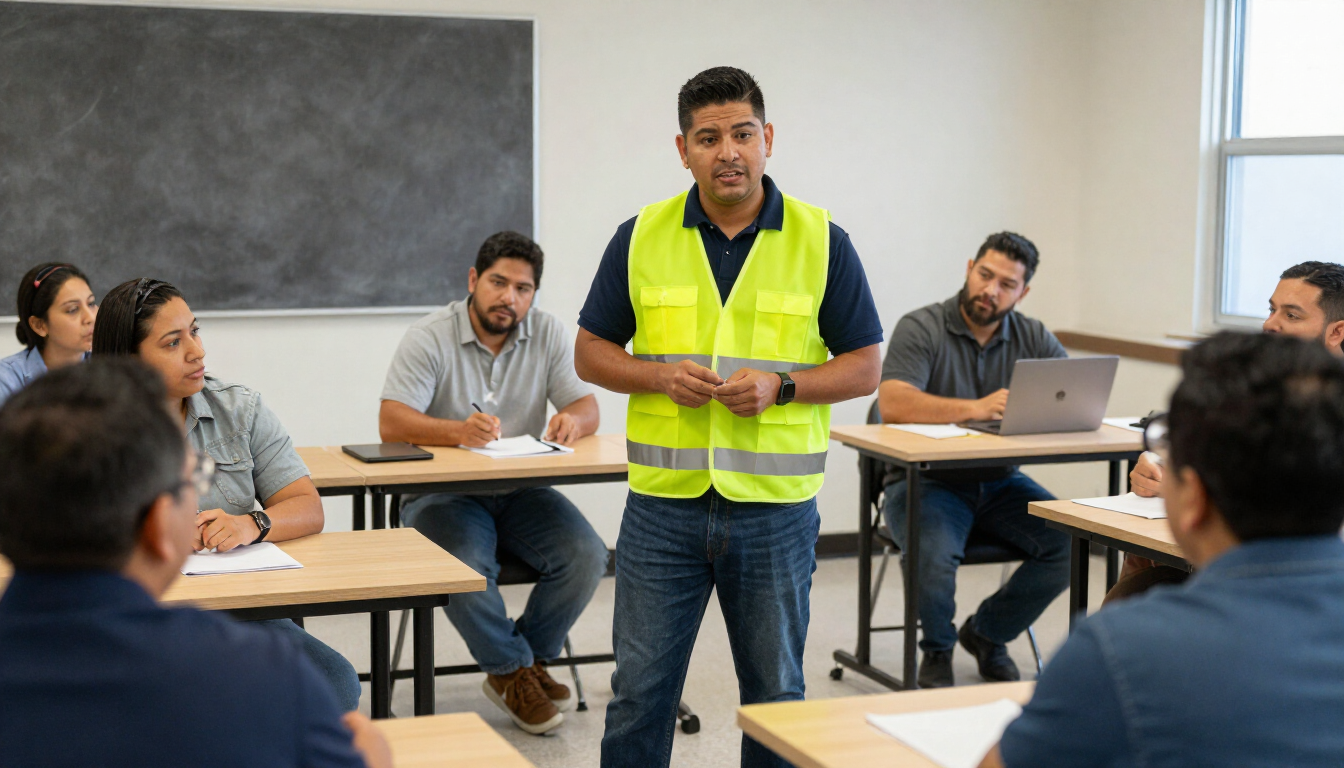
- Hire Bilingual Trainers: Whenever possible, use trainers who are fluent in the native language of the workers. This allows for real-time translation, cultural nuance, and the ability to answer questions accurately.
- Interactive Training: Incorporate visual aids, hands-on demonstrations, and practical exercises to reinforce the verbal and written instructions.
- Continuous Evaluation: Regularly assess the effectiveness of the training through quizzes, practical evaluations, and feedback from the workers.
Bilingual safety training is a must for modern businesses. It keeps you compliant, lowers the risk of accidents, lifts employee morale, and makes good financial sense. When you communicate clearly, you build a strong safety culture that protects your most valuable asset: your people.